






























Many parents wonder, how much should my 3 month old weigh? At this stage, babies are growing rapidly, and weight is one of the key indicators of overall health and development. Understanding what is normal can help you feel more confident in tracking your baby’s progress.
Every baby grows at their own pace, but having a general guideline helps you recognize whether your baby is thriving. Instead of focusing on exact numbers, it’s important to look at consistent growth patterns and overall well-being.
A baby heart monitor allows parents to monitor sleep, movement, and activity in different areas at the same time. It helps you stay aware of your baby’s condition while doing daily tasks or resting.

Understanding the Healthy Weight Range for Your Three-Month-Old Baby
- Typical Weight Range at Three Months
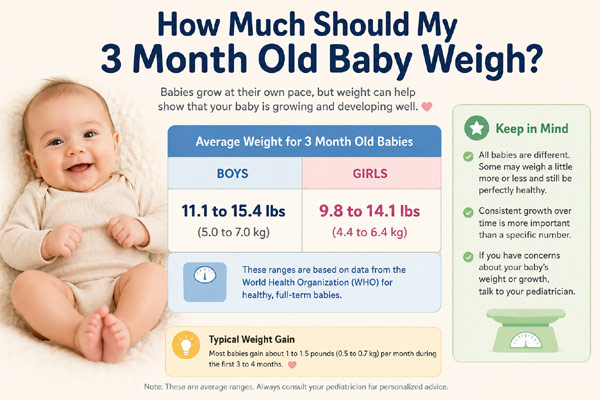
- Most babies weigh between 5 to 7.5 kilograms (11–16.5 pounds).
- Some babies may fall slightly above or below this range and still be healthy.
- Growth depends on feeding, genetics, and overall health.
- Growth Over Exact Numbers
- Consistent weight gain is more important than hitting a specific number.
- Babies grow at different speeds, especially during growth spurts.
- Regular checkups help ensure steady progress.
- Individual Differences in Growth
- Premature babies may have different growth timelines.
- Larger or smaller builds can be normal depending on family traits.
- Always consider overall development, not just weight alone.
Average Weight Benchmarks for Boys and Girls at Three Months
Average Weight for Boys
- Around 6.4 kg (14 pounds) on average.
- Some boys may weigh more due to natural body composition.
- Growth spurts may temporarily increase weight gain.
Average Weight for Girls
- Around 5.8 kg (12.8 pounds) on average.
- Girls may weigh slightly less but still grow at a healthy rate.
- Differences between boys and girls are normal at this stage.
Understanding Variations
- Not all babies will match averages exactly.
- Small differences do not usually indicate a problem.
- Focus on steady growth rather than comparison.
Interpreting Growth Charts and the 50th Percentile
- What Growth Charts Show
- Charts track weight, length, and head circumference over time.
- Pediatricians use them to monitor growth trends.
- They help identify patterns rather than one-time measurements.
- Understanding the 50th Percentile
- Means your baby is in the middle compared to others of the same age.
- Being above or below this line is still normal.
- Healthy babies can fall anywhere between percentiles.
- Tracking Progress Over Time
- Consistency matters more than percentile ranking.
- Sudden drops or spikes may need attention.
- Regular monitoring helps detect early concerns.
Expected Monthly and Daily Weight Gain Patterns
Monthly Weight Gain
- Babies gain around 0.7 to 1 kg (1.5–2 pounds) per month in early months.
- Growth may slow slightly after the third month.
- Spurts can cause temporary rapid gain.
Daily Weight Gain
- About 20–30 grams per day is typical.
- Some days may show little or no change.
- Overall weekly trends are more reliable.
Growth Spurts and Changes
- Babies may feed more during growth spurts.
- Temporary fussiness or sleep changes are common.
- These phases support healthy development.
How Birth Weight and Genetics Influence Current Size
Impact of Birth Weight
- Babies with higher birth weight often remain larger.
- Smaller newborns may take time to catch up.
- Early growth patterns often continue over time.
Role of Genetics
- Family body type influences baby size.
- Parents’ height and build play a role.
- Growth patterns may reflect family traits.
Natural Growth Variation
- Some babies grow faster or slower naturally.
- Differences are normal when development is steady.
- Focus on long-term trends instead of comparisons.
The Impact of Feeding Methods on Early Growth Trends
- Breastfed Babies
- May gain weight more gradually.
- Feed more frequently throughout the day.
- Growth patterns can differ from formula-fed babies.
- Formula-Fed Babies
- May gain weight slightly faster in early months.
- Feeding schedules are often more structured.
- Intake is easier to measure and track.
- Combination Feeding
- Provides flexibility for parents.
- Growth may vary depending on feeding balance.
- Monitoring intake helps maintain consistency.
Physical and Behavioral Signs of Adequate Nutrition
- Physical Signs
- Steady weight gain over time indicates that your baby is receiving enough nutrients for healthy growth.
- Regular wet and dirty diapers show proper hydration and effective digestion of milk or formula.
- Healthy skin tone and muscle development suggest that your baby is getting balanced nutrition and growing well physically.
- Behavioral Signs
- Being alert and active during wake periods reflects good energy levels and overall well-being.
- Feeding regularly without difficulty shows that your baby is comfortable and able to consume enough milk.
- Sleeping comfortably between feedings suggests that your baby is full, satisfied, and not experiencing discomfort.
- Developmental Indicators
- Meeting basic milestones like head control indicates proper muscle strength and development.
- Responding to sounds and visual cues shows healthy brain development and sensory awareness.
- Showing interest in surroundings reflects curiosity and appropriate cognitive growth for this stage.
When to Consult Your Pediatrician About Growth Concerns
Unusual Weight Patterns
- Sudden weight loss or no gain may indicate feeding issues or underlying health concerns that need immediate attention.
- Rapid, unexplained weight increase can sometimes signal overfeeding or fluid retention and should be evaluated by a doctor.
- Falling significantly off the growth curve may suggest that your baby is not receiving enough nutrition or is experiencing developmental concerns.
Feeding Difficulties
- Poor appetite or refusal to feed could be a sign of discomfort, illness, or difficulty with digestion.
- Frequent vomiting or spit-up beyond normal levels may indicate reflux or other feeding-related conditions.
- Trouble latching or swallowing can affect proper milk intake and may require guidance from a healthcare professional.
Behavioral Concerns
- Extreme lethargy or low energy may signal that your baby is not getting enough nutrients or is unwell.
- Persistent irritability or crying that cannot be soothed may indicate discomfort, hunger issues, or underlying medical concerns.
- Delayed developmental responses, such as lack of movement or interaction, may require early evaluation and support.
Early consultation with a pediatrician helps identify potential issues quickly and ensures your baby receives proper care and guidance.

Final Thoughts
Understanding how much your 3 month old should weigh provides helpful guidance, but it should never replace observing your baby’s overall health and development. Every baby grows differently, and steady progress is the most important sign of well-being.
A split screen baby monitor allows you to monitor your baby’s activity and rest from multiple angles, helping you stay informed and reassured throughout the day.
By focusing on growth patterns, proper feeding, and regular checkups, you can confidently support your baby’s healthy development during this important stage.
Follow – https://healthhuff.com for More Updates